
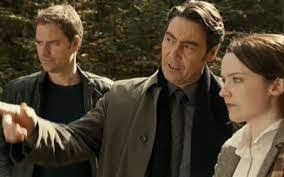
“Still Life: A Three Pines Mystery” is a Canadian television film based on the novel “Still Life” by Louise Penny. It was released in 2013 and directed by Peter Moss. The film is part of a series of adaptations featuring Chief Inspector Armand Gamache, a character from Penny’s mystery novels.
The story is set in the fictional village of Three Pines in Quebec, Canada, where Chief Inspector Gamache is called to investigate the suspicious death of a beloved local artist named Jane Neal. As Gamache delves into the investigation, he uncovers secrets and tensions lurking beneath the idyllic surface of the picturesque village. The film explores themes of human nature, community, and the complexities of relationships.
“Still Life: A Three Pines Mystery” stars Nathaniel Parker as Chief Inspector Armand Gamache and is praised for its atmospheric setting, compelling characters, and intricate plot. It’s part of a series of adaptations of Louise Penny’s novels, which have garnered a dedicated fan base for their rich storytelling and vivid portrayal of Canadian landscapes and culture.
Review
As I watched “Still Life: A Three Pines Mystery,” I found myself immersed in the quaint yet mysterious atmosphere of the fictional village of Three Pines. The film, based on Louise Penny’s novel of the same name, introduces us to Chief Inspector Armand Gamache, portrayed with depth and nuance by Nathaniel Parker, but I did find him a bit flat at times which I think is due to the difficulty of translating Penny’s languid style into snappy tv dialogue.
The story revolves around the investigation into the suspicious death of beloved local artist Jane Neal. As Gamache delves into the case, he uncovers layers of secrets and tensions within the close-knit community, each character harboring their own complexities and motivations.
I felt like Ruth Zardo, the irrascanble poet whose foul mouth and taciturn nature was especially well-camptured and the quiet beauty of Jane Neal’s inner life were brought to life on the screen. They seemed more real than their book counterparts, which hover around mythological proportions in Penny’s novel, Still Life:
One of the film’s strengths lies in its faithful adaptation of Penny’s novel. While some details may have been condensed or altered, the essence of the story remains intact, capturing the heart of Three Pines and its enigmatic inhabitants. Some of the fairytale language and seclusion is sacrificed to make Three Pines a place where real people live, work, and kill.
The undercurrent of sadness and pessimissim that pervades Penny’s work is also toned down, mostly done through looks and glances since there is not access to a narrator or Chief Inspector Gamache’s inner portentous monologue. Depending on your fondness for either, you may miss the layer or introspection, but I think it was best left out since this is a one off movie and not a min-series.
What is lost in long discursions about food and feelings is made up by in the idyllic storybook scenery that captures the lovingly crafted town of Three Pines in Penny’s novel.
The scenic beauty of the Canadian landscape serves as a picturesque backdrop to the unfolding mystery, adding to the film’s captivating atmosphere. Despite occasional pacing issues, particularly in the film’s exposition, the central mystery maintains a compelling allure, keeping viewers guessing until the satisfying conclusion.
“Still Life: A Three Pines Mystery” delivers an engaging and atmospheric adaptation that will appeal to fans of the source material and newcomers alike. With strong performances, a captivating plot, and an evocative portrayal of village life, it’s a worthy addition to the genre of mystery cinema.
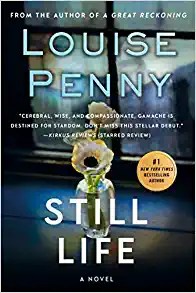
You can read my review of Still Life by Louise Penny here.


 Golden Age of Detective Fiction
Leave a comment