
Poirot is approached for aid by Diana Maberly, who reveals a troubling turn in her engagement to Hugh Chandler. Hugh, gripped by fear of inherited insanity within his family, terminates their engagement, citing his belief that he is succumbing to madness. Despite Colonel Frobisher’s skepticism, the family friend and Hugh’s godfather, doubts linger regarding the true cause behind Hugh’s abrupt withdrawal from the Navy, ostensibly to manage the family estate.
Accompanying Diana to Lyde Manor, Poirot encounters Hugh, a robust and seemingly robust young man. Colonel Frobisher elaborates on the family’s troubled history, including Hugh’s grandfather’s institutionalization. Further revelations unfold, shedding light on Hugh’s mother’s untimely demise in a boating accident and her prior engagement to Frobisher.
Poirot’s scrutiny unearths unsettling details surrounding the sheep incident, revealing Hugh’s inexplicable presence with blood-stained garments and a lack of recollection. The Admiral, weathered by these events, deems severing ties with Diana as the best course, lamenting the demise of the Chandler lineage.
In probing Hugh’s psyche, Poirot uncovers recurring themes of hydrophobia in his dreams and hallucinations, compelling him to delve deeper. Despite Hugh’s hallucinatory episodes, Poirot remains convinced of his sanity, initiating clandestine investigations including a nocturnal search of Hugh’s quarters and a surreptitious visit to a local chemist.
As night falls, Hugh, in a daze, emerges from his locked chamber wielding a bloodied knife, fueling suspicions of his descent into madness. Intent on forestalling tragedy, Poirot intercepts Hugh’s suicidal intentions, exposing a plot to drive him to self-destruction.
The true orchestrator, inspired by Frobisher’s tales of datura poisoning, manipulated events by adulterating Hugh’s shaving cream with Admiral’s atropine eyedrops, inducing hallucinations and thirst. Poirot’s deduction incriminates the Admiral, revealing a chilling scheme born of familial turmoil and vengeance for past transgressions.
In a defiant act, the Admiral ventures into the woods, brandishing Hugh’s shotgun. A single gunshot reverberates, signaling a tragic conclusion to the saga of Lyde Manor.
The Review
The Cretan Bull was a sinister story, and I loved every word. The obsession with bloodlines and the themes of madness versus sanity gave The Cretan Bull story a delicious undercurrent of dread. I was also surprised by how bloody this short story is compared to other Poirot tales.
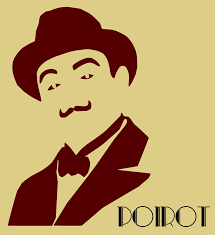
The Poirot of The Cretan Bull is more serious, thoughtful, and suspicious- much closer to how he is presented in his novels. There’s none of the playful Poirot from The Nemean Lion. He is trying to save young Hugh Chandler from madness or death. Poirot deftly examines the stories people are organically telling him; he is a part of the story, not merely rushing from person to person, conducting interviews, and then pulling the solution out from under his hat. There’s a sense that he is fearful this whole escapade could spiral out of control before he can find the killer.
I found the killer and the crimes committed to be especially heinous in this short story because there’s a kernel of truth explored about the lengths a person will go to if betrayed, especially when the foundation of an entire family is built on a lie. The duality of love and family built on such a lie compared to Hugh and Diana’s pure love is a poignant contrast, especially since the one almost destroys the other.
The Cretan Bull allegory is much more prominent in this story. It gives the story some strong, even grotesque, imagery that adds to the desperation to solve the crime. It enhances the story into a classic instead of the mere scaffolding Christie used to structure the story.
The Cretan Bull is another standout short story in the Labors of Hercules collection.
The Labors of Hercules
Story 1: The Nemean Lion
Story 2: The Lernaean Hydra
Story 3: The Arcadian Deer
Story 4: The Erymanthian Boar
Story 5: The Augean Stables
Story 6: The Stymphalean Birds

 Golden Age of Detective Fiction
Leave a comment