
A Christmas Tragedy Synopsis:
A series of cattle maiming’s had baffled and terrified a small village, with police and farmers banding together to catch the miscreants for several weeks to no avail. These events dominated conversation at the dinner before the holiday party at Cleveer Hall.
After the holiday party, the houseguests went to bed. Lady Molly and her maid were roused from sleep by a cart speeding on the road holding who Lady Molly and her maid believed were the cattle killers when someone shouted, “Murder, murder, help, help!” from the other side of the house.
On the outside steps to the terrace lay Major Seeley with his own gun. He was viciously stabbed in the back and left for dead. The guests believed that he was killed by someone who lay in wait when he went to catch the people harming the cattle.
Lady Molly and her maid have many suspects to eliminate because Major Seely has many enemies, including any members of his household and his neighbors, due to his garrulous and disagreeable temperament.
The chief theory amongst the guests is that some young man who had courted Major Seely’s beautiful daughter, Margaret, had been found undesirable either through his own bearing or because he was a fortune hunter and did away with the Major when he was found wanting. Now Margaret would be a wealthy heiress, and there would be no one to stop an unfortunate marriage if she was not on her guard. Mr. Lawrence Smethik chief among the pretenders disliked by Major Seely. Margaret however had recently been favoring another paramour especially during the dance the night before the murder.
There was also a violent quarrel between Mr. Smethik and Major Seely in his study which spilled out into the hallway before Major Seely shouted that Mr. Smethik was no longer welcome at Cleveer Hall before throwing him out on his ear. However, despite their suspicions the guests agree not to mention the incident between Major Seely and Mr. Smethik at the inquest and shield him from prosecution because his involvement seems too preposterous.
Two days after the inquest, the local police summon Lady Molly to the station, where Mrs. Haggarr, the wife of one of the workmen who live at Cleveer Hall tells her a queer tale: her husband, Mr. Haggart, a mentally challenged man, saw a young gentleman prowling in the garden on the terrace side before running home to his cottage. The man found a scrap of paper in the garden afterwards which held a moonstone and diamond ring inside it.
Lady Molly walks with Mrs. Haggart to meet her husband, but nothing comes of the interview; he reiterates the story told to the police by his wife with no ancillary details. Another workman on the estate corroborates his story, who says Mr. Haggart ran home and found the ring. The workman also identified Mr. Smethik loitering by Cleveer Hall.
During the investigation, Mr. Smethik was seen by many people going to the Hall and around its grounds near midnight. He also was the purchaser of the moonstone and diamond ring. Mr. Smethik’s servants said that he returned home after 2:00 am on Christmas morning, and Mr. Smethik refused to give any alibi for the two hours between Major Seely’s assault and his return home. He is arrested and a trial against him begins. Lady Molly knows that he is innocent, but Mr. Smethik does not offer anything in his defense and if she cannot find proof of her belief he will be hanged.
On their way back to the Black Swan Inn, Lady Molly, and her maid see Margaret Seely and Captain Glynn talking animatedly in Margaret’s car, surrounded by parcels. When they arrive at the Black Swan, they are met by Mr. Smethik’s lawyer, Mr. Grayson, who begs her to save Mr. Smethik’s life.
Mr. Smethik and Margaret Seely had been engaged, and on the night of the quarrel with her father, he planned to give her the ring he had bought. Since he could not attend the dance, she would meet him later that night; curiously, she refused to take the ring then- saying that she would like to have it later, along with the letters she had written to him.
Now, Mr. Smethik believes she tricked him into meeting at night and giving him her letters because she no longer loved him but Captain Glynn. As he was transferring the letters to her- Major Seely’s cries rang out in the night, rousing the household, and Mr. Smethik saw Margaret Seely run to her father. He went away and flung his ring into the muddy garden. However, Margaret Seely denies the encounter, leaving him to his deadly fate.
That night Lady Molly begins to mull over the stories told to her decided to go to see the Haggart’s at their home in the morning. She confronts Mrs. Haggart with her conjecture that Major Seely fired Mr. Haggart and Mr, Haggart killed him with his clasp knife. He then picks up a knife and offers it to his wife begging her to kill him. She takes the knife from his hand and lunges at him before being wrestled to the ground by Lady Molly. Lady Molly then refuses to leave the house until Mrs. Haggart confesses that she egged on her husband to kill the Major, but he was too afraid and so she killed him herself.
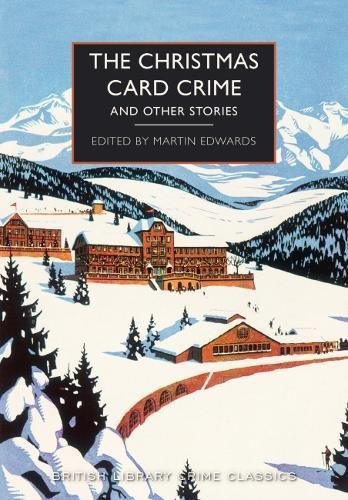
The Review
What a ponderous story. The beginning set piece of the dinner and party were eshewed away with the barest coloring and then the story labored under long discursions about the terrible fate awaiting Mr. Smethik were Lady Molly is asked to help…and then she just doesn’t. It isn’t until Mr. Grayson tearfully begs for her help that she placidly agrees to think about helping Mr. Smethik, even though she says she knows he is innocent. How she know this is never revealed.
Lady Molly then begins her investigation by going to the Haggart’s house, where she pretends to be from the welfare department and says she will take Mr. Haggart into care so he doesn’t go to prison for killing Major Seely. Her assertion about Mr. Haggart is merely a conjecture that Mrs. Haggart ends up falling for her, and then she tries to kill her husband. This is where the “investigation” ends because Mrs. Haggart’s confession is heard by two witnesses, which frees Mr. Smethik.
Besides the merest crumbs of an investigation, we learn very little of Lady Molly, except that she is the most beautiful, fair, and intelligent woman her maid Molly has ever seen. Mary’s chronicling leaves much to be desired; her slavish sanctification of Lady Molly leaves little for the reader to ascertain her true nature, thoughts, or feelings. Indeed, Lady Molly is a woman of few words in this mystery, saying only a few words of assent to get others to begin their long soliloquies about Mr. Smethik’s guilt or innocence. I do no grasp her as a character and feel Mary is an unrealistic narrator.
I am unfamiliar with the Lady Molly stories, and The Christmas Tragedy doesn’t entice me to read more of her adventures. If I revisit her mysteries, it will be on the strength of Baroness Orczy’s reputation rather than the merits of The Christmas Tragedy.

Baroness Emmuska Orczy, born as Emma Magdolna Rozália Mária Jozefa Borbála Orczy de Orczi on September 23, 1865, in Tarnaörs, Hungary, was a prolific and versatile writer best known for her classic adventure novel, The Scarlet Pimpernel. Descended from a noble Hungarian family, she spent her early years in various European cities due to her father’s diplomatic career. Fluent in several languages, Orczy developed a passion for literature from an early age. She married Montague Barstow in 1894, and the couple settled in London, where she began her writing career.
The Scarlet Pimpernel, published in 1905, became an instant success, introducing the iconic character of Sir Percy Blakeney, a dashing Englishman who leads a double life as a rescuer of French aristocrats during the Reign of Terror. The novel spawned numerous sequels and adaptations across various media, cementing Orczy’s reputation as a master of adventure fiction. Beyond her famous creation, Orczy wrote in diverse genres, including historical fiction, romance, and detective stories.
Baroness Orczy was also a talented playwright, with several of her works performed on London’s West End. She was known for her strong characters, intricate plots, and vivid historical settings. Despite facing some critical dismissal in her time, her works have endured, captivating generations of readers with their swashbuckling action, romance, and themes of heroism and sacrifice.
Baroness Emmuska Orczy continued to write prolifically until her death on November 12, 1947, in Henley-on-Thames, England. Her legacy lives on through her timeless literary creations, which continue to inspire and entertain readers around the world.

 Golden Age of Detective Fiction
Leave a comment