
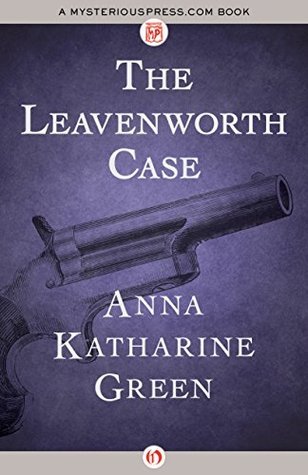
The narrative commences with the tragic demise of Horatio Leavenworth, a prosperous retired merchant who is found murdered in his own library. Investigator Ebenezer Gryce and lawyer Everett Raymond delve into the perplexing case, only to uncover a startling revelation: no one could have exited the Manhattan Mansion before the discovery of the body the following day. As the investigation unfolds, the involvement of Leavenworth’s orphaned nieces, Mary and Eleanore, Hannah, the maid, and a mysterious gentleman who suddenly appears adds complexity to the mystery.
Several years before Mr. Leavenworth’s death, he gathered his nieces and told them that since he preferred Mary, she would be the sole inheritor upon his death while Eleanore would get nothing. Despite the strange and unfair will, no animosity existed among the family, and they had a happy household.
Also in the household is Mr. Leavenworth’s young assistant, who helps him finish a manuscript he has been writing for several years and runs his vast financial empire. The staff is rounded out with a butler, a cook, a “tweenie,” and a young housemaid named Hannah, who disappears the same night Mr. Leavenworth is murdered.
Mr. Gryce and Mr. Raymond try to console the two young women after Mr. Leavenworth is found dead, but they are surprised to see a nervous, almost hostile tension between the two cousins. Mr. Gryce, cool and composed, shrewdly tries to assess their interactions, while Mr. Raymond is wholly and utterly besotted with Eleanore. Mr. Raymond, who is so in love with the beautiful Eleanore, decides, gallantly, to free her from any suspicion, get to the bottom of the heinous murder, and attempt to find Hannah. Mr. Gryce is not so bold in his claims but does say he will look into the matter.
After Mr. Raymond and Mr. Gryce leave the room where they interview the two cousinsand are standing by the door assigning various tasks to each other, they overhear, in hushed tones, one cousin accuses the other of murder. Eleanore moved out of the family home the next day and reduced lodging at a boarding house. As police investigators search the house and analyze alibis, the noose is tightening around Eleanore’s neck, and she does not provide satisfactory answers at the inquest.
Mr. Raymond is beside himself and vows to find out the truth of the matter. Mr. Gryce, a trained private detective, is not enthralled to have the amateur Mr. Raymond as an assistant but decides to use him, assigning most of the arduous grunt work to Mr. Raymond, including finding Hannah. In contrast, he works out the various clues they have collected.
What follows is a story about love and greed and how these twin flames ultimately conspire together to create a perfect storm for murder.
The Review
The Leavenworth Case is an interesting Victorian mystery, and this mystery is the birthplace of so many elements of mystery writing that are still used today: a shady butler, an inquest, and a coroner’s report that elucidates some facts but often casts suspicion with a wide net, and the loom of a court trial, where the life of a possibly innocent person may be unfairly railroaded by the power and exigency of a trial.
The much-used “body in the library” trope, made famous by Mrs. Christie in The Body in the Library, was first used in the Leavenworth case to much grand effect. There are incriminating papers, a blood pool, and the much-used imagery of a man slumped over a gigantic desk used to great satisfaction. Especially when he is, by his own admission, a benevolent tyrant in business affairs and the heart.
The Leavenworth Case is heavily rooted in the Victorian love story. There’s much beating of hearts, wailing in the breast about the beauty and honor of Mary and Eleanore and the worthiness of their paramours. Mr. Leavenworth has many fixed and somewhat irrational ideas about what sort of men are good enough for his nieces, and like all his decrees, he is a part of his downfall. Mr. Raymond’s singular devotion to Eleanore is a bit over the top and, I think, supposed to be a shade comical. Still, another more shocking love story moderates this storyline in the second half.
Mr. Raymond is such a large part of the action of The Leavenworth Case that I actually forgot that Mr. Gryce is the principal investigator. Green makes reference to the fact that he is absent for large swaths of the story by saying he has terrible rheumatism but admits in the story that it mysteriously doesn’t affect him in the resolutory punch up with the villain at the end.
Despite Anna Katharine Green pioneering having a singular serialized detective in her creation of Mr. Gryce, I don’t think The Leavenworth Case sharply defines him- he definitely doesn’t leap off the page like Sherlock Holmes would when he is created a few years later. I wonder if he gets more colored in and nuanced in subsequent books. Still, he’s rather insubstantial to the story outside of providing more convincing and contradictory evidence than whatever Mr. Raymond discovers. The reader sees very little of Mr. Gryce using his wits or extricating information through unavailable channels to Mr. Raymond. He comes off as a bit like a Deus ex machina plot element instead of a fully developed character. While future books will have much to do with the detective and his assistant or chronicler, the relationship between Mr. Gryce and Mr. Raymond is not so clearly defined, primarily because they almost always work apart following their own set of leads. I am unsure whether Mr. Raymond will be a permanent fixture in these stories or was a sidekick just in The Leavenworth Case.
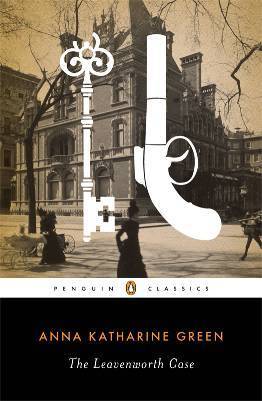
I’ve made much ado about the characters and some of the general themes of the book, but now let’s get down to brass tacks- how was the mystery? It was a mixed bag for me. Green did a great job of laying out a case for each principal suspect and having each of these motives investigated to completion. She provided twists and revelations each timethat kept the story moving briskly. Things are constantly being uncovered, and she is very good at providing just enough evidence and ambiguity for the reader to change their mind about who the guilty party is.
However, the second love story while engrossing the reason they can’t be together is like the unfair will, unneccessairly ridiculous. I think Green does try to put a little more wieght behind her flimsy reason by creating a lengthy backstory, but it just didn’t hold water for me. The second secret love story is also almost like a novel within the novel, I mean she really gets into it, so if your not on a fan of romance in your mystery books this is going to be a trial for you. The second love story is heavily foreshadowed, but that actual story and it’s wide ranging history is more complect than most modern readers of mystery novels would expect.
The love story was a great avenue to open up the story and involve several new characters, so it’s not just centered on everyone in the house- whose numbers are limited and through the course of this illicit love story, we find out what happened to Hannah, which is a locked room mystery inside the larger mystery. Two mysteries in one! I have to say I wasn’t able to figure that out at all and loved the resolution of the locked room mystery as a way to narrow down the set of suspects and reclose the circle that Green introduced at the beginning of the story.
One of the most exciting aspects of the book which is pretty long for the period- is that astute readers might be able to pick out the killer and the motive from the outset. I clocked the killer but only understood the whole puzzle during the killer’s monologue. Mr. Gryce and Mr. Raymond. They cleverly plotted and took everyone down a bazillion avenues before the final reveal. It may feel like a cliche to modern readers, but itwas again well-received and exciting for its original audience.
The Leavenworth Case was a fantastic mystery for its original audience, and its success during the Victorian era is easy to understand. It is a good mystery for modern readers, but it suffers from being so of its time in language andtemperment. Be ready for long discursive sentences filled with platitudes and florid language. Be prepared for the height of Victorian social mores, especially obfuscating meaning through vague politeness. Be ready for the beauty of Mary and Eleanore, which is oft-discussed and much compared, and how their differing looks ultimately decide who inherits and who doesn’t. However, Mr. Leavenworth dresses it up a bit nicer when he talks to his two nieces and says, “Mary pleases him more.”
There also a lot of the plot and clueing that is shrouded in antiquity. I hope you like learning about how paper was cut down to write letters, and who was cutting it, and the different types of paper for letter writing, and how it was cut and so on and so forth. This and some of the other concepts in The Leavenworth Case are so of the Victorian era that it might be difficult to comprehend what is actually happening without a quick google search from time to time. Some of the language is also out of use so could be a challenge for people who are not used to reading books of this time period, however, this again can be remedied by a google search.
I liked The Leavenworth Case, especially for its historical merit, but it was difficult to read sometimes. I look forward to reading more of Anna Katharine Green’s prolific work. Still, I can see why Holmes and Watson are more popular from the same era- her writing is a shade inaccessible and overlong, with too much emphasis on dramatic love stories. Where Arthur Conan Doyle’s Sherlock Holmes and Watson feel timeless- Mr. Gryce and The Leavenworth Case feel solidly stuck in the Victorian era.
Anna Katharine Green
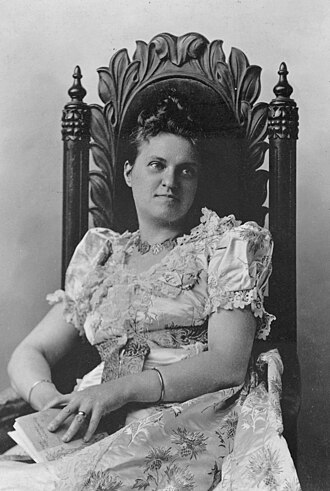
Anna Katharine Green (1846-1935) was an American author and one of the pioneers of detective fiction. She was born on November 11, 1846, in Brooklyn, New York, to a well-educated and literary family. Green began writing poetry at an early age and had a passion for literature. She was influenced by the works of Edgar Allan Poe and Sir Arthur Conan Doyle.
Green’s breakthrough came in 1878 with the publication of her first detective novel, “The Leavenworth Case.” This novel introduced the character of Ebenezer Gryce, a detective who would appear in many of her subsequent works. “The Leavenworth Case” was a huge success and established Green as one of the foremost mystery writers of her time.
Throughout her career, Green wrote numerous novels, short stories, and plays, many of which featured intricate plots, clever twists, and memorable characters. She was known for her meticulous attention to detail and her ability to create suspenseful narratives that kept readers guessing until the very end.
Some of Green’s other notable works include “A Strange Disappearance,” “The Filigree Ball,” and “The House of the Whispering Pines.” Her writing style often combined elements of mystery, romance, and psychological drama, earning her a dedicated following among fans of detective fiction.
In addition to her writing, Green was also involved in various social and literary circles. She was a member of several literary societies and was active in promoting women’s rights and social reform.
Anna Katharine Green continued to write well into her later years, publishing her final novel, “The Strange Disappearance of Mr. Marygold,” in 1926. She passed away on April 11, 1935, leaving behind a legacy as one of the pioneering figures in the development of detective fiction. Her works continue to be celebrated for their ingenuity, suspense, and enduring appeal.


 Golden Age of Detective Fiction
Leave a comment