
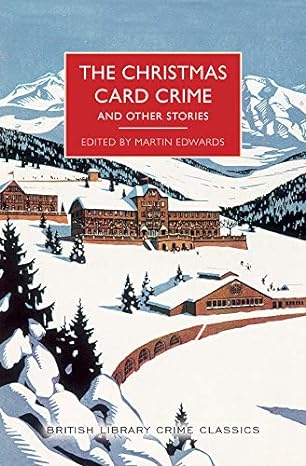
By The Sword, written by Selwyn Jepson, is the second short story featured in the third anthology of Christmas short story mysteries collected by Martin Edwards. The title, ‘By The Sword, ‘alludes to the protagonist’s fate and the dramatic events that unfold.
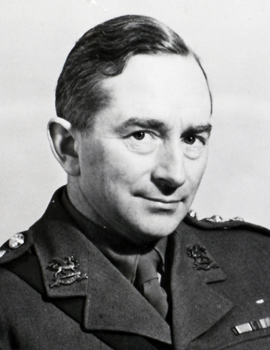
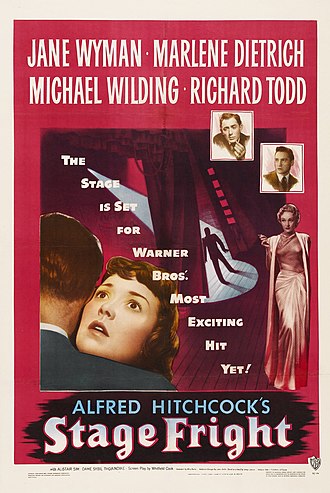
If the name Selwyn Jepson fails to ring any bells, you might be surprised to know he was a talented writer who dominated the silver screen. Alfred Hitchcock adapted his famous work, Man Running, into the celebrated 1948 film Stage Fright.
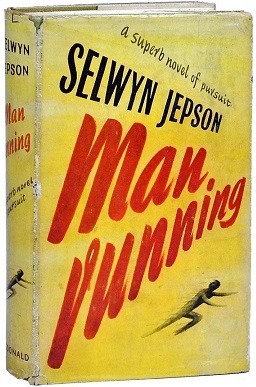
By the Sword is one of Jepson’s early short stories, a testament to his skill in creating dramatic tension. The impulsive nature of the main character, Alfred Caithness, adds a thrilling unpredictability as he rushes towards his destiny during a fateful Christmas visit to Dingle House.
The Story
Alfred Caithness, a down-on-his-luck grifter, is welcomed into the warm and festive home of his well-to-do- if rather a stodgy cousin, the Honorable Justice Caithness, his beautiful wife some twenty years the judge’s junior, and their precocious young son, Robert, over the Christmas holidays.
During his visit, Alfred Caithness chats lazily with his cousin’s wife, Barbara, about the “family curse”:
“You mean that a Caithness always dies by the sword?” She had been thinking of it a moment before, when she had seen Robert grown to a man and pursuing the career which his ancestors had fulfilled so gloriously. “It’s very queer, though,” Alfred said, “how many of them have been killed that way.”
Edwards, Martin. The Christmas Card Crime: And Other Stories (British Library Crime Classics Book 0) (p. 31). Sourcebooks. Kindle Edition.
However, they both agree that the curse is probably broken since neither Alfred nor the judge are soldiers. Barbara and Alfred joke that Robert will have to do the soldiering and slaying when he is grown.
Emboldened by Barbara’s friendly spirit, Alfred confesses that he loves her and wants her to run away when he leaves Dingle House after Christmas. Barbara, repulsed, says nothing, and they are soon interrupted by Justice Caithness, who enters the room with an air of knowing his presence immediately quelling the tension in the air.
The evening meal proceeds with a veneer of neutrality. Barbara strives to control her hatred, and Alfred, having misread her silence for acquiescence, tries to ingrate himself with his cousin so he can later ask him for money to invest in his latest, and potentially not even real, money-making scheme.
Alfred Caithness, deluded by plans to run off with Justice’s money and wife, is enraged when his cousin placidly refuses to lend him more money. Enraged, Alfred hatches a plan to kill his cousin, a decision that sets him on a dangerous path, leading to a senseless murder and putting himself on a crash course with the Caithness curse.
The Review
By the Sword is a fantastic short story that is ingenious in executing dramatic irony. The story revolves around Alfred Caithness, a man whose unbridled ego and megalomaniac desires lead to his downfall. The disparity between what Caithness believes is happening and what is real is created through the masterful subtleness of other characters’ reactions. If the reader needs to pay more attention, they might believe Alred Caithness’s point of view. However, Jepson slowly widens the gap between what is true and Caithness’s perceptions until the narrator’s unreliability is unquestionable.
Jepson even writes in the twist we are all expecting, which further reinforces that the reader and the author know of Alfred Caithness’ fatal flaw-his unchecked ego and megalomaniac desires that ultimately lead to his downfall.
However, that’s not the end of the story.
In a final, masterful stroke, Jepson seamlessly reintroduces the family prophecy, so subtly that its significance eluded even Alfred Caithness and myself. When the realization dawns, it’s as if Jepson has performed a miraculous feat, pulling a real-life rabbit out of a hat.
By the Sword is, without a doubt, one of the most captivating short stories I’ve ever had the pleasure of reading. I urge you to experience it for yourself.
Other Stories In This Collection:
A Christmas Tragedy by Baroness Orczy

 Golden Age of Detective Fiction
Leave a comment