
Welcome, readers, to my third review of my #20BooksofSummer2025 reading challenge. Check out my first three reviews: Death of an Airman by St. John Sprigg, The Studio Crime by Ianthe Jerrold, and Impact of Evidence by Carol Carnac if you missed them. You can read more about the 20 books I picked in my introductory post here.
Introduction
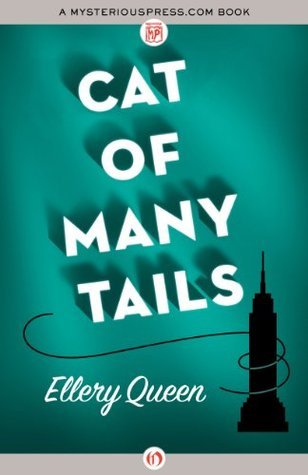
In Cat of Many Tails, Ellery Queen moves beyond the traditional whodunit into psychological thriller territory, crafting a gripping tale of fear, media frenzy, and urban paranoia. Set in a sweltering postwar New York City, the novel follows a city gripped by panic as a serial killer—nicknamed “The Cat” by the press—murders seemingly unconnected victims, striking without warning. As hysteria builds and public trust crumbles, Queen is drawn into a case unlike any he’s faced before. With its chilling atmosphere and deeply introspective detective, Cat of Many Tails is not just a mystery—it’s a reflection on the fragility of reason in the face of fear.

The Plot
New York City is gripped by terror as a series of seemingly unrelated murders strikes across the boroughs. The victims have little in common—young, old, rich, poor, men, women, even different races and religions. The only link between the murders is a symbolic one: each crime scene features a length of brightly colored silk cord used to strangle the victim, left behind like a calling card. The press, feeding on fear and sensationalism, dubs the killer “The Cat.” As the city spirals into paranoia, the media frenzy only intensifies the public hysteria.
Enter Ellery Queen. At the request of the mayor, Queen is drawn into the investigation. At first, even he is stymied. The randomness of the victims and the killer’s impersonal methods suggest a psychopath at large, but Queen suspects something deeper—something calculated beneath the chaos.
The novel then follows Queen’s slow, methodical unraveling of the truth. Clues are scarce, and the killer seems always a step ahead. Along the way, Ellery must confront his past traumas and failures—especially a case he once failed to protect innocent lives from being lost—leading to one of the most psychologically complex character arcs in the Queen series.
As the noose tightens around the truth, Queen realizes the killer’s actions are not random at all. They are the actions of a mentally disturbed person, with roots in deep personal grievance and masked beneath the facade of mass hysteria. The final reveal is chilling, poignant, and packed with a twist that redefines earlier clues in a classic Ellery Queen fashion.
The Review
Ellery Queen’s Cat of Many Tails (1949) is a masterclass in psychological suspense, blending the classic detective format with the emerging anxieties of postwar urban life. Set in a stiflingly hot New York City gripped by fear, the novel follows a chilling serial killer known only as “The Cat,” who prowls the boroughs with silent efficiency, leaving a trail of strangled victims and a terrified populace in his wake.
But “The Cat” is not a name conjured by the police. It is the press, in their relentless frenzy, that coins the moniker—transforming a killer into a mythic menace. Queen, ever the meta-observer of crime fiction, uses this as an incisive critique of media sensationalism. The press doesn’t just report the news; it shapes the narrative, amplifying fear and creating an atmosphere of paranoia where suspicion hangs thick in the summer air, until the public gathered together, fear palpating in the air, break. This leads to a disturbing and heartwrenching scene where panic leads to the violent deaths of more innocent people- more dead than “the cat” could ever hope to strangle, and more blood on Ellery Queen’s hands because he couldn’t root out the killer.
This is one of the first Ellery Queen novels to venture deeply into the psychological terrain of both the detective and the killer. The usual locked-room puzzles and clever deduction are still present, but the tone is darker and more introspective. Queen himself struggles—emotionally and intellectually—with the case. The detective is not the perfectly composed logic machine of earlier stories, but a man grappling with the horror of failure as the bodies continue to fall. His resilience in the face of repeated dead ends becomes one of the story’s most compelling arcs. This isn’t just a story of solving a mystery—it’s about confronting your limits.
The killer’s victims come from all walks of life and ethnic backgrounds, and their only common thread seems to be that there isn’t one. This randomness fuels the city’s fear and the plot’s momentum. Queen and the police are baffled by the apparent lack of motive or method, and the story uses this uncertainty to great effect, keeping readers as off-balance as the investigators. Each chapter adds a new layer of confusion—and yet it all resolves with a sharp, stunning twist ending that remains one of the genre’s more clever and unsettling reveals.
What also stands out is how vibrantly the novel captures the mood of New York. The city is practically a character in its own right—oppressive, chaotic, alive. From brownstones and bars to stoops and streetcars, the novel evokes a vivid sense of place that serves as the perfect backdrop for a killer who moves among millions, unseen.
At its core, Cat of Many Tails is more than just a whodunit—it’s a meditation on fear, media influence, and psychological vulnerability in the face of the unknown. And it’s a testament to Ellery Queen’s evolving style: more character-driven, more socially aware, and no less thrilling for it.
However, the first third of the novel, where Ellery is grappling with his recent failure in the Wrightsville Heir case and his indecision about whether he wishes to step into the public eye again as New York’s avenging angel, is turgid, overwrought and repetitive. My interest flagged several times and I almost DNF’d the book because it’s so monotonous. Readers will have to push through until a suspect is identified and the chase begins.
The chase and the tightening of the noose around this larger-than-life boogeyman are incredibly satisfying. We’re hunting a hunter and the chase is out of a noir thriller fit for the big screen- the killer is everything the city built up: evil, deranged, a silent predator, who stalks and mercilessly kills its victims, leaving the city in fear and urgency. Until the case falls apart- a spectacular storybook villain, tailored for the papers is putting on the performance of a lifetime to give this roiling city some closure.
The twist, a further exploration of how fear and grief can drive a person to madness, is clever. However, I am unsure how psychologically sound it is, and it makes me want to re-read the beginning to see if there were signs and clues masked in everyday conversation that I missed.

Final Thoughts
Cat of Many Tails is a psychological thriller that relishes in it’s dark themes and final flourishing reversal of expectations. An introspective Ellery Queen struggling to save a frenzied city is a fresh take on the 20th book in this long running series and well-known character. While I commend the book for it’s chances, it really needs tightening a tuning up. The flabby, inertialess first third tamped down, any real fear for the reader that the characters are feeling.
The manhunt for the killer definitely picks up the pace of the book, but this whole manic sequence is sort of cut off at the knees for the sake of the twist. When the killer is revealed, I didn’t remember anything in the long set up of the book that made me go- ah, yes, that makes sense of those earlier character moments or plot points. Instead, I was left wondering if, it all really hung together as neatly as the writer wanted it to,
Suppose you want a more psychologically intricate Ellery Queen novel or are interested in reading one of the early iterations of a serial killer mystery. In that case, this might pique your interest. It’s definitely not a good novel for those unfamiliar with the character, as the book attempts to subvert many familiar tropes from earlier stories, including the aloof Ellery Queen.
In the end, Cat of Many Tails has a lot of interesting themes and scathing social commentary, but it never really rose above the sum of its parts. It’s brilliant, tedious, exciting, and excruciatingly slow-paced. It’s a bit of a mess, and I was thrilled to have finished it, but I kind of want to reread it and catch all the things I missed the first time.
Further Reading: Ellery Queen
Ellery Queen Detective
- The Spanish Cape Mystery (1935)
Ellery Queen Detective Short Stories
- The Death of Don Juan (1960)
- E=Murder (1960)
- The Wrightsville Heir (1960)
- Diamonds in Paradise (1960)
- The Case Against Carroll (1960)
Mike McCall
- The Campus Murders (1969)


 Golden Age of Detective Fiction
Leave a comment