Content Warning: Suicide. This book and post will discuss suicide/ suicidal ideation and may not be suitable for all readers.
Edith Caroline Rivett was the birth name of British crime writer E. C. R. Lorac. She wrote several crime stories during the Golden Age of Detective Fiction, and her stalwart Inspector MacDonald is a gem. Despite being supremely popular during her lifetime, her mysteries fell into obscurity until the British Library started reprinting her works under the “Crime Classics” label. Readers can now enjoy several of her mysteries, including Post After Post Mortem, initially published by the Collins Crime Club in 1936.
Plot
The Surray family is part of England’s glittering literary circle. The five Surray children have returned home to celebrate the youngest Surray child’s college graduation. The eldest Surray child, Richard, pulls their mother aside and asks her to let his middle sister Ruth, stay at the family home to rest. A famous novelist, Ruth, has just published her latest work and is run down from overwork. Richard, worried by Ruth’s reliance on sleeping draughts and generally depressed mood, hopes staying in the country with their parents is restive.
Preoccupied with her books and recovering from an unhappy love affair, Ruth assents to stay at the family home. However, her summer stay is cut short by her sudden suicide. The note left behind does not illuminate her decision and plunges her mother into deep grief. Her bother, Richard, is completely baffled by the stark turn of events and is not convinced of the inquest’s verdict of suicide.
Confused, shocked, and exhausted by the last few weeks’ events, Richard Surray returns home. He begins opening his mail, and within his voluminous correspondence is a letter from Ruth detailing a visit she and her mother plan to take to visit Richard later in the summer. The letter, dated the night of her suicide, is cheerful and full of future plans. Richard, once more, is plunged into uncertainty about Ruth’s supposed suicide and calls in Inspector MacDonald to investigate.
With great delicacy and compassion, Inspector MacDonald listens to Richard Surray’s re-telling of the past two weeks and agrees to look into the matter but warns it might not lead to any answers. His investigation reveals many hard truths about Ruth Surray, love triangles, the brutality of the literary world, and the hatred Ruth Surray inspired in her killer. Hate so intense they would burn her whole family alive.
Review
Post After Post-Mortem was a book that almost broke me. The first third of the book details how her family is absolutely devastated by Ruth’s death, and they are each dealing with their grief; Richard is obsessed with finding out why Ruth committed suicide, her mother is plunged into deep mourning, and her youngest sister, with whom a literary and love rivalry has broken out is trying to irradicate her feelings of guilt. The long circular discussions about what has happened and the emotional outbursts of the characters feel real. I have had friends commit suicide- and the never ending puzzling over what should have been done to prevent such a horrible thing happens. The suicide note brings real illumination or comfort- which is also true to life. In my experience, it leads to different questions without answers. The reader sits with the family in their grief until it is unbearable. Then Ruth’s letter arrives.
I enjoy that Ruth’s letter to Richard is not taken as proof that Ruth didn’t commit suicide. People in a suicidal state often can be happy and then overwhelmed with sadness. Inspector MacDonald’s agreement to investigate is respectful and kind to Richard.
The murder investigation and mystery of who killed Ruth Surray were so engrossing with pain and goodness revealed about Ruth Surray, which tears down the familial illusion about her as a stoic, emotionally untouchable woman whose one pursuit is excellent books. Ruth is embroiled in a tumultuous love affair; she is also frequently at odds with her publisher, her younger sister, and sometimes dislikes her profession. Ruth Surray is so focused on her personal life, maintaining her professional prestige, and bolstering her famous family, that she is dismissive of anyone who cannot further her ambitions. The mythos of the Surray family is deftly deconstructed and is almost destroyed outright by the vengeful murderer.
Post After Post-Mortem is one of my favorite reads of 2023 and has stayed with me since reading it April. I highly recommend it.
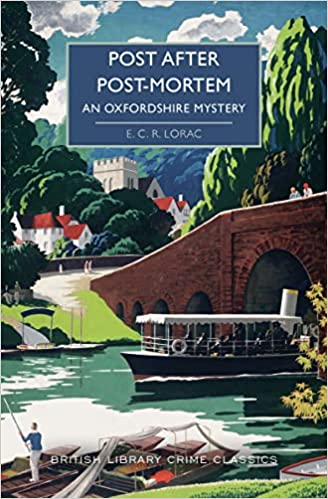
Post After Post-Mortem Reviews
A Cat. A Book. And A Cup of Tea.
My E. C. R. Lorac Reviews

British Library Crime Classics





 Golden Age of Detective Fiction
Leave a reply to 2023 Mid Year Check In: My Favorites – Golden Age of Detective Fiction Cancel reply