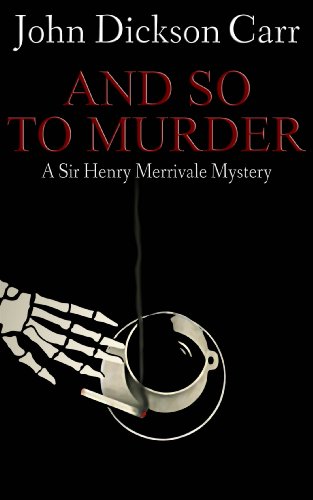
Monica Stanton, a sheltered vicar’s daughter, is thrown into the lion’s den when she arrives at Albion Studios to start her screenwriting career after the success of her first saucy novel, Desire. Albion Studios is a whirlwind place. There’s a crew making an anti-Nazi propaganda film, an ever-changing movie about the battle of Waterloo (which sounds more hilariously terrible with each script change by the movie executive. This is a seriously hilarious runner in the book), and popular book adaptations coming to the big screen, Monica Stanton’s Desire and William Cartwright’s newest gritty detective story.
However, Monica is surprised that she hasn’t been hired at Albion Studios to write the screenplay for her novel, Desire; she will write the script for William Cartwright’s detective story. Completely bewildered by this turn of events, Monica protests but is quickly ushered around the studio and installed in the writer’s bullpen.
She has a disastrous first encounter with the hot-headed William Cartwright, who insults her book and is enraged that he is writing the screenplay for her trollop. They soon loathe each other, but Monica contends that he would be good-looking if he didn’t have a disgusting beard. (Many pages are devoted to the state of this beard, so you’ve been warned.)
Monica decides to make the best of the situation and starts learning to write scripts. She’s also privy to a lot of office gossip and knows there have been several inexplicable accidents on the stage of “Desire.” Still, she believes they have nothing to do with her since she is minimally involved with “Desire’s” production. However, when Monica Stanton is lured to the dark set of William Cartwright’s novel and acid is poured down a telephone speaking tube to burn her face, she believes she has a deadly enemy at Albion Studios.
After Monica Stanton’s attempted murder, William Cartwright calls Inspector Humphrey Masters to investigate the numerous dangerous accidents at Albion Studios. Inspector Masters soon believes there might be a larger Nazi plot behind whatever is going on and calls in aid of Sir Henry Merrivale.
The Review
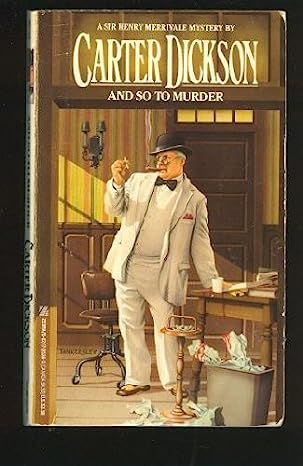
Ok, so confession time, I don’t like John Dickson Carr mysteries. I’ve tried reading several in the American Mystery Classics range published by Otto Penzler and permanently abandoned them a few chapters in. I just don’t seem to jive with his bombastic and over-the-top writing style, I never seem to connect with any of the characters, and it bothered me. I wanted to love John Dickson Carr’s works because everyone else seemed obsessed with them. He’s a master of crime fiction, and maybe I’m just too much of a rube to “get him.” So I asked one of my close friends, who is a devotee of Carr’s works which book she’d recommend for me, and she enthusiastically said, And So To Murder, which is written under his Carter Dickson pseudonym. She promptly mailed me the copy, filled with carefully penned marginalia, and patiently waited for me to read it so she could discuss all her favorite bits with me.
…And I liked it a lot! I enjoyed how And So To Murder starts in the middle of the action; Monica Stanton has already written her saucy best seller and is already on her way to the movie studio to begin her scriptwriting career. I am a fan of books that start in situ because they cut out a lot of dull, narrated backstories in favor of revelations through dialogue.
The dialogue in And So To Murder is probably the best aspect of the novel; it’s snappy and bright and crackles off the page. You get pompous movie executives, languid sentences by movie starlets, and lots of banter between Monica Stanton and William Cartwright, which sells their enemy-to-lovers romance. It reminded me of the back-and-forth between Katharine Hepburn and Cary Grant in “A Philadelphia Story,” also released in 1940.
The wacky setup of star-struck and plucky Monica Stanton, who is basically quivering out of her skin to write the movie script of Desire, but being told somewhat inexplicably that she’s writing the script to And So To Murder, William Cartwright’s newest detective story and he’ll be writing her books screenplay was so funny to me. Mainly since they both loath each other’s works and would have very little to offer as expertise, that does seem like some hair-brained idea an out-of-touch movie studio executive would think is a dynamite brain wave. And so this book about two movie scripts sounds more like a movie itself.
As Monica acquaints herself with the minimal number of people actually working at the studio, we, the reader, are introduced to John Dickson Carr’s closed circle of suspects in an organic way. Then, all of these dangerous and deadly attempts on Monica’s life start happening, and again it feels staged and heightened, but it also works better for me because of the movie setting. It also helps reinforce the idea that these bizarre accidents are not meant to harm Monica but someone else. The backdrop of intermittent air raids and the undercurrent of fear about German spies, defectors, and war also helped ground And So To Murder and keep it from flying too far into over-the-top movie hijinks was an outstanding balance of tone.
Getting to know the others around the movie studio was fun. Following their crisscrossing motives and ferreting their double (triple?) identities are hallmarks of John Dickson Carr’s opus. There are minor mechanical death devices, tragic backstories, and a locked room element, which round out Carr’s usual bag of tricks.
I would say that even though John Dickson Carr makes a big deal about the locked room element in the story by having many characters mention it several times, I am not convinced that a movie studio with various closed sets is an airtight locked room setup, as he insists. However, unlike some of his other locked room mysteries, it is possible to solve And So To Murder with your given information.
Sir Henry Merrivale is…in this book. His detecting prowess is primarily relegated to the sidelines, and he doesn’t appear that often; your main thoroughfare is Monica Stanton, so if you’re a huge Merrivale fan, you might be disappointed, but I think Monica Stanton is a thoroughly enjoyable investigator, and her contentious alliance with William Cartwright makes up for the lack of Merrivale
Overall, And So To Murder made John Dickson Carr’s style and point of view more accessible to me. It also made me excited to read more of his works. If you have any recommendations of which of his works I should read nexyfor this John Dickson Carr novice leave them in the comments below.

 Golden Age of Detective Fiction
Leave a reply to The Plague Court Murders by Carter Dickson a.k.a. John Dickson Carr (1934) – Golden Age of Detective Fiction Cancel reply