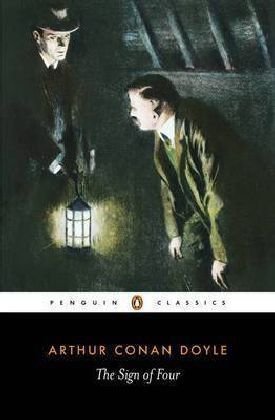
In 1888, Dr. Watson reproaches Holmes for his cocaine use, to which Holmes defends his need for mental stimulation and abhorrence of stagnation.
Miss Mary Morstan presents Holmes with a perplexing case involving the disappearance of her father, Captain Arthur Morstan, years earlier. Holmes uncovers a connection to Major Sholto, Mary’s father’s acquaintance, who had died coincidentally around the time Mary began receiving mysterious pearls.
Investigating further, they confront Thaddeus Sholto, who confesses to a tragic incident involving Mary’s father and a hidden treasure. Their journey leads them to Bartholomew’s house, where they find him dead under suspicious circumstances.
Holmes deduces the involvement of two culprits: Jonathan Small, a one-legged man, and his Andamanese accomplice. After a thrilling chase and capture, Small reveals a tale of betrayal and revenge revolving around the lost treasure.
Despite the lack of treasure, Mary finds comfort in her growing affection for Watson, much to Holmes’ displeasure.
The Review
The Sign of the Four which is the second full length Holmes novel and I suspect that it was written when Arthur Conan Doyle found his creation tiresome. Holmes is incredibly emotionally volatile, sniping at Watson, and generally all of his snobbery, and peevish pensiveness are pushed to eleven. Maybe this an accurate portrayal of cocaine addiction, but in any case he grates and I think that’s why this is more of John Watson’s story.
Watson, immediately smitten by Mary Marston, drives the plot into action by subtlely manipulating Holmes into action and off his couch and it’s Holmes’ affection for Watson that keeps him interested in this international adventure. Holmes, preoccupied with discovering the secrets of Captain Marston, leaves Watson to his wooing.
However, this love story is not one for the ages. While Watson admires and is attracted to Mary Marston, I don’t think he likes her or really knows anything about her. She is a trophy and we get very little from her point of view about Watson. This is not a problem unique to Doyle’s writing, but it does explain why whenever her character is introduced in tv or movie adaptations there series comes to a screeching halt: there’s just not much to her besides a pretty face.
I think this threadbare love story and dullish mystery until the final action set piece bolster my opinion that Holmes and Watson mysteries work better in the short story format. The Sign of the Four in fact feel like it was a pretty decent short story that was stretch to novel length without adding depth of character or making the mystery more intricate. Everything just feels a bit lacking.

 Golden Age of Detective Fiction
Leave a reply to The Red-Headed League by Arthur Conan Doyle (1891) – Golden Age of Detective Fiction Cancel reply