
In Mavis Doriel Hay’s third and final mystery, we, the reader, are treated to a good old-fashioned country house murder with a Christmas theme. Sir Osmond Melbury is gathering his brood together for the winter holidays. He hopes to host a perfect family Christmas even though nearly every one of his nearest and dearest relations despises him.
When Sir Osmond Melbury is found dressed as Santa Claus on Christmas day with a bullet in his head, there’s no shortage of suspects, especially when everyone stands to gain considerably by his lavish will. However, the only person with the most straightforward opportunity has no motive, which baffles investigators.

The Review
Off the bat, I will admit that The Santa Klaus Murder will not be for everyone because there are literally over a dozen main characters and several minor family members to keep track of, so if you’re not a fan of a large suspect pool, this book will not be for you.
The Santa Klaus Murder is like Hercule Poirot’s Christmas on steroids. Sir Osmond Melbury induces his five children and their family to come to the family estate Flaxmere under great duress of cutting off their financial support. He uses his great fortune to meddle in his children’s lives and has used it before the start of this book to create matrimonial matches of varying degrees of success to further the prestige and fortune of his family name.
The only one of his children to defy Sir Osmond Melbury is his daughter, Hilda, who lives with her daughter, Carol, in abject poverty because she dared to make her marriage a love match. Since her marriage, she has lived without financial support from her father. However, having much of the same proud temperament, she does not mind being cast off, and some affection between father and daughter still exists.
Sir Osmond Melbury’s youngest daughter, Jennifer, having seen how her older siblings’ lives have turned, must decide if she will fall into step with her father’s plans to pick her suitor, the handsome, dull Oliver Whitcomb, or marry her beloved, Philip Cheriton and be cast out to make her way in the world like her sister, Hilda. It is speculated that young Whitcombe has some hold over Sir Osmond Melbury-blackmail perhaps? And tries to induce Jennifer to follow her father’s plan to keep her at home foras long as possible before marrying Whitcombe. Jennifer, who is used to a particularly affluent lifestyle, is unsure if she can live on the reduced circumstances she will be forced into if she throws her lot in with Philip Cheriton. When Sir Osmond Melbury is found shot dead in his study, things are made infinitely more accessible and more complicated for Jennifer as suspicions swirl around her and Philip.
I am a big fan of stories with tyrannical fathers who are killed on Christmas Day, and now their entire estate is up for grabs by their family, one of whom is their killer, so The Santa Klaus Murder is tailor-made for my enjoyment from the outset. I liked how miserable Sir Osmond Melbury made his family and how his death directly connected to his desire to rule his roost with an iron fist.
I did feel some sympathy for Jennifer, probably not as much as readers when this was initially written because not as many American women are in the situation since we have more access to controlling our financial well-being. Still, I did really get to understand her plight and many of the other characters in great depth because Hay wrote chapters from their point of view.
Chapters written from the perspective of multiple characters definitely make this book feel fresh and enlivened the well-trod territory of a country house murder. Many modern mystery writers employ this style, but it was not nearly as fashionable back in the 1930’s. I think using this tactic also makes sure the reader really gets to know the main characters of the book and tacitly relegates others to the back burner, which is a great way to narrow down the suspect pool when the cast of characters is as large as it is in The Santa Klaus Murder.
I also found telling the story from different points of view a great way to tell and retell the timeline, making it easier for the reader to check for discrepancies without getting bored. It’s also a fun way for the reader to participate in catching suspects out in lies, attempts at misdirection, and other obfuscation. I got a real sense of satisfaction watching a bunch of terrible people try and tear each other down while hiding their own heinous deeds and thoughts. Based on how mercilessly Hay draws these vapid and shallow characters, I don’t think we are supposed to feel sorry for these rich bouffant attempt to save their skin (It’s like someone made “Arrested Development” into a murder mystery.)
We are given houseguest Kenneth Stour as a beacon of light in a house of craven people. Stour, an actor and old flame of one of the daughters, Edith, who she has thrown over for her father’s money, attempts to find the murderer and clear Edith’s name so he can win her over again. Stour, charismatic and bumbling, attempts to chummily investigate the murder with Inspector Rousdon, who shuts down any friendly feeling between them fast. As far as Inspector Rousdon is concerned, he doesn’t need any amateur detective gumming up his investigation. However, Stour forges on ahead without help from the investigating officers.
There’s a lot to like about The Santa Klaus Murder. There are plenty of characters to root for or against, the push and pull of many love stories, which I wanted to collapse or win the day at various points of the story. A murder that couldn’t have happened to a nastier patriarch, and of course, lots of holiday trimmings to round out this toothsome mystery.
British Library Crime Classics

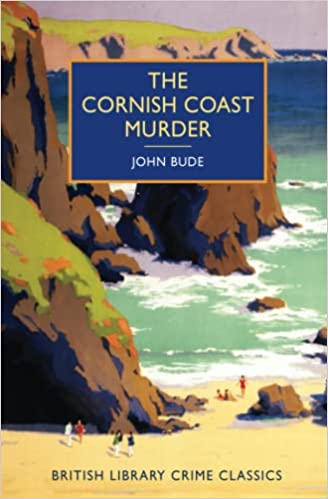
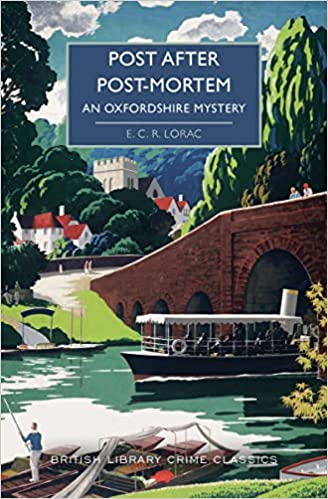


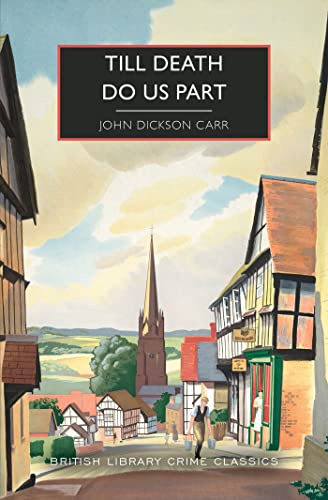

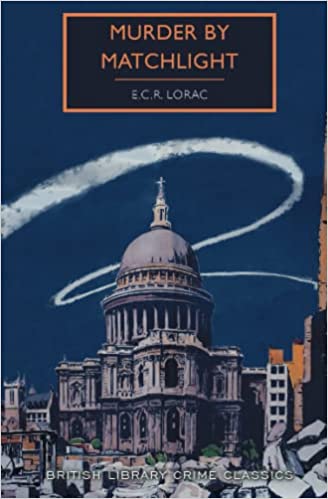



The Poisoned Chocolates Case by Anthony Berkeley (1929)
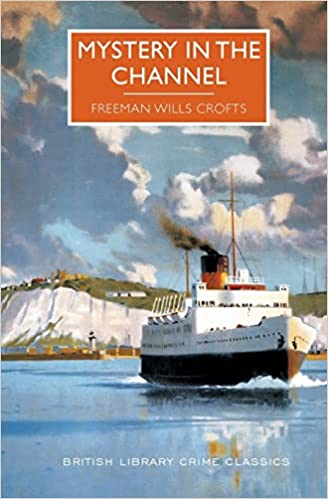
Mystery in the Channel by Freeman Wills Crofts (1931)
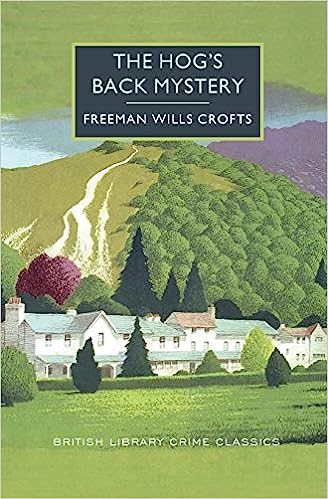
The Hog’s Back Mystery by Freeman Wills Crofts (1933)
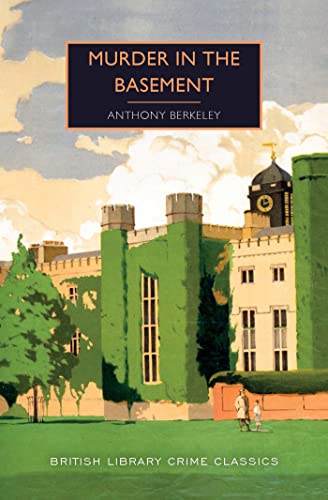
Murder in the Basement by Anthony Berkeley (1934)
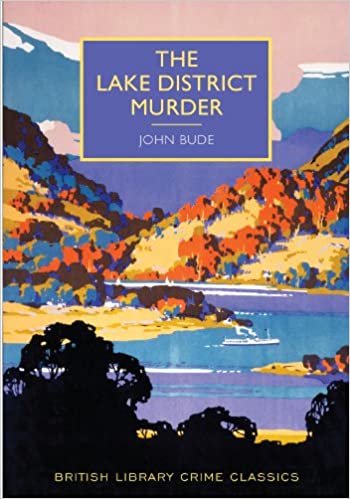
The Lake District Murder by John Bude (1935)
The Cornish Coast Murder by John Bude (1935)
Post After Post-Mortem by E.C.R. Lorac (1936)
The Cheltenham Square Murder by John Bude (1937)
These Names Make Clues by E.C.R. Lorac (1937)
Antidote to Venom by Freeman Wills Crofts (1938)
Till Death Do Us Part by John Dickson Carr (1944)
Fell Murder: A Lancashire Murder by E.C.R. Lorac (1944)
Murder by Matchlight by E.C.R. Lorac (1945)
Death on the Riviera by John Bude (1952)
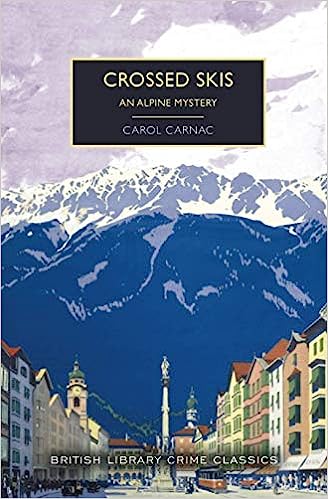
Crossed Skis by Carol Carnac (1952)
The Body in the Dumb River by George Bellairs (1961)
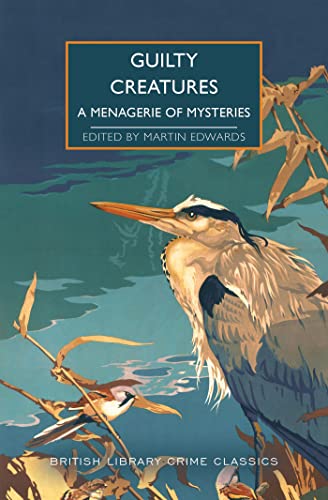
Murder by the Book, edited by Martin Edwards (2021)

 Golden Age of Detective Fiction
Leave a comment