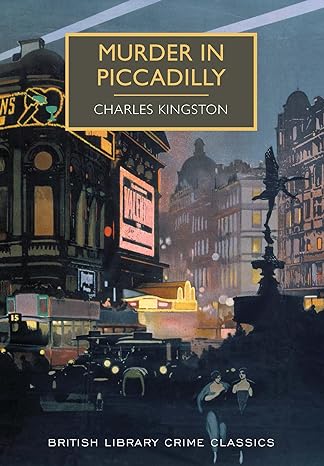
Bobbie Cheldon, heir to the Cheldon Estate and fortune, is in love with a nightclub dancer named Nancy. Nancy, quite the little minx, has had her eye on Bobbie Cheldon the moment he sets foot in her lair, The Frozen Fang. She hopes to move up from her sordid post as a second-rate dancer to the mistress of a grand fortune.
Bobbie Cheldon in hopes of impressing his mother and his rich Uncle Massey into accepting Nancy into the fold of the Cheldon family and assuring him a handsome stipend to keep himself and Nancy in a life of style and wealth holds a dinner party where his dubious family can meet Nancy.
The dinner party is a disaster. Nancy is common, coarse, and too brassy and quickly alienates Bobbie’s refined mother. Bobbie’s Uncle Massey, a sharp-witted and sharp-tongued man, is especially cruel to Nancy and Bobbie during the party and after the soiree tells Bobbie in no uncertain terms not to fall in love with a dancer like he did in his youth. Bobbie cannot be swayed in his devotion and petulantly demands an excellent job from his uncle despite being basically skill less since he’s doted on his whole life.
Uncle Massey obliges his request and offers Bobbie a job in one of his rubber firms as a clerk for a pittance, gleefully promising that in five years, he may make enough to keep himself, his mother, and Nancy. Uncle Massey harshly rebukes Bobbie, reminding him that the Cheldon Estate and his vast fortune won’t pass into Bobbie’s greedy hands for at least 20 years since Uncle Massey is barely over 50.
Bobbie knows that the only way to keep Nancy is to have a fortune, so he plots with Nancy’s manager, Nosey Rusland, to kill his Uncle Massey. Bobbie tries to kill Uncle Massey with Nosey’s gun but fails miserably, and in his desperation, he agrees to have Nosey hire someone wholly unconnected to Bobbie to do the deed.
The only catch is that Bobbie must pay Nosy and his hired man a small fee once the job is done.
Bobbie, foolish and in love, agrees, and Uncle Massey is knifed in the Piccadilly Underground surrounded by 1000 witnesses, all of whom saw nothing.
It is a perfect crime, and Bobbie will be ensconced in the Cheldon Estate with Nancy on his arm once the inquest is held in eight days.
But the eight days are nothing short of a nightmare for Bobbie as Inspector Wakeland and his team slowly ferret out the truth, and Nosey Rusland starts putting the screws on Bobbie for more money.
Caught in a murder-for-hire plot, suspected by his mother, and up to his eyes in blackmail, can Bobbie hold out the next eight days and avoid the hangman’s noose.

The Review
I really hated Murder in Piccadilly by Charles Kingston and am in no hurry to read more books by him. The first half of the book is so slow and tedious with seemingly endless permutations of Bobbie mooning over Nancy and bemoaning his lack of funds.
This part of the story went on and on, but I heard that the book had a great twist, so a larger part of me was hoping that somehow Bobbie would be the victim of the murder—but with no such luck.
Let’s talk about Bobbie.
He is possibly the dumbest person alive. Everyone in the book comments on how foolish, short-sighted, and gullible he is, so it’s not just my opinion. He lives up to his reputation, and it is stated several times in the novel that he gets swept up in this criminal enterprise because of his idiocy. Everyone can see Nancy is a gold digger and repeatedly tells him not to marry her, but still, he persists.
It’s tough to empathize with Bobbie and his terrible situation because he has no redeeming qualities. This isn’t a story where a besotted man, who is basically a good guy, has one fatal flaw that blinds him from seeing his terrible fate, and we, the reader, hope he can rectify the situation before the end of the book; no, Bobbie is weak-willed and determined to get Uncle Massey’s money because he feels entitled to a good life. Nancy is just the latest reason that he uses to justify his greed.
What’s even worse is that Uncle Massey is a miserable old cusswho has kept his nephew and sister-in-law in abject poverty ever since the death of his brother. He lords over them, laughing at their economizing and how they have to keep up the “Cheldon honor” while barely being able to feed and clothe themselves, even though he obviously is deeply attached to his sister-in-law.
Uncle Massey keeps them subservient out of spite. I thought maybe the twist was that he was once engaged to his sister in law and was punishing her because she spurned him and married his brother had a happy life for a time and had a child, while Uncle Massey has no domestic life.
It would explain the complicated and twisted relationship full of malice, but no. He is just a spiteful person, so it’s hard to really give a hoot when he’s brutally killed.
The murder-for-hire plot is detailed so many times by Nosey and Bobbie that I felt relief by the time it happened. I think he was trying to show Bobbie being slowly taken in by Nosey and Bobbie’s soul being corrupted by crime, but I think if Nosey had worked out his murder-for-hire plot at the beginning of the book and presented it to Bobbie, he would have agreed.
We, the readers, are supposed to believe that Nosey is a master criminal who slowly ensnares Bobbie. But Bobbie is stupid and weak-willed, never thinking about the future, so I really don’t think this was a necessary step. Also, Nosey’s murder-for-hire plan isn’t that clever. Maybe I’ve watched too much true crime, but…that’s basically the main plan of every rich, entitled, would-be murderer with means and money.
When Inspector Wakeland finally arrives on the scene after Uncle Massey’s death, he knows Nosey is a criminal and has been the brains behind many crimes before. Does he bring Nosy in for questioning? No. Inspector Wakeland also knows that even though Bobbie has an alibi for when the murder was committed, he is the only one who benefits. In his first interview with Bobbie and his mother, he uncovers how Bobbie needed money to marry Nancy and the terror and guilt Bobbie felt.
Does he bring Bobbie in for questioning, and then he cracks telling them about the murder-for-hire plot, but then they find out that Uncle Massey was killed for a different reason, and that is the fantastic twist!
No.
He toys with Bobbie and Nosey like a cat with a mouse, even betting Nosey that he’ll solve the case before Bobbie even ascends to the Cheldon Estate, and he does. He slowly gathers evidence- I think to torture them- hangs the man hired for murder, uncovers the whole plot, and leaves them to their fates.
So, the unique twist that makes up for this horrible slog of a book where I have to read about terrible people doing terrible things with no end in sight is… okay. The twist was telegraphed several times in the book, so when it finally happened, I was like…yeah, that’s being revealed now.
Murder in Piccadilly was a thoroughly unpleasant read, but it was well-written and plotted. The clues were nicely nestled amongst the narration, and the puzzle made sense and came together. There was some karmic payback for the terrible people in the book, which felt like a relief. Overall, it’s not a poorly written or constructed book; I just loathed every second I spent reading it. I think the mystery is much lower caliber than other books I have read in the British Library Crime Classics series, and I don’t know why this book was selected to be a part of it.

Charles Kingston Biography
Charles Kingston O’Mahony, known professionally as Charles Kingston, was an Irish journalist and author active in England during the Golden Age of Detective Fiction in the 1920s and 30s. Many of his novels were situated in the bustling backdrop of London, notably featuring a seven-book series centered around the fictitious detective Chief Inspector Wake of Scotland Yard. While his literary style was characterized as more proficient than revolutionary, Kingston exhibited a nuanced understanding of London’s criminal milieu.
In addition to his fictional works, Kingston delved into non-fiction writing, producing a series of widely-read books chronicling the exploits of fraudsters, murderers, and various miscreants, alongside renowned legal cases and anecdotes involving judges. Among his more scholarly endeavors were his inaugural publication, a historical account of the viceroys of Ireland (1912), a scholarly exploration of Morganatic marriages, narratives recounting the allure of Monte Carlo, and an examination of the literary heritage of Esher and Thames Ditton, locales where he resided during his later years.
British Library Crime Classics Reviews
The Poisoned Chocolates Case by Anthony Berkeley (1929)
Mystery in the Channel by Freeman Wills Crofts (1931)
The Hog’s Back Mystery by Freeman Wills Crofts (1933)
Murder in the Basement by Anthony Berkeley (1934)
Weekend at Thrackley by Alan Melville (1934)
The Chianti Flask by Marie Belloc Lowndes (1935)
The Lake District Murder by John Bude (1935)
The Cornish Coast Murder by John Bude (1935)
Death of an Author by E.C.R. Lorac (1935)
The Santa Klaus Murder by Mavis Doriel Hay (1936)
Post After Post-Mortem by E.C.R. Lorac (1936)
The Cheltenham Square Murder by John Bude (1937)
These Names Make Clues by E.C.R. Lorac (1937)
Antidote to Venom by Freeman Wills Crofts (1938)
Till Death Do Us Part by John Dickson Carr (1944)
Fell Murder: A Lancashire Murder by E.C.R. Lorac (1944)
Murder by Matchlight by E.C.R. Lorac (1945)
The Theft of the Iron Dogs by E.C.R. Lorac (1946)
Death on the Riviera by John Bude (1952)
Crossed Skis by Carol Carnac (1952)
Crook o’ Lune by E.C.R. Lorac (1953)
The Body in the Dumb River by George Bellairs (1961)
Murder by the Book, edited by Martin Edwards (2021)

 Golden Age of Detective Fiction
Leave a comment