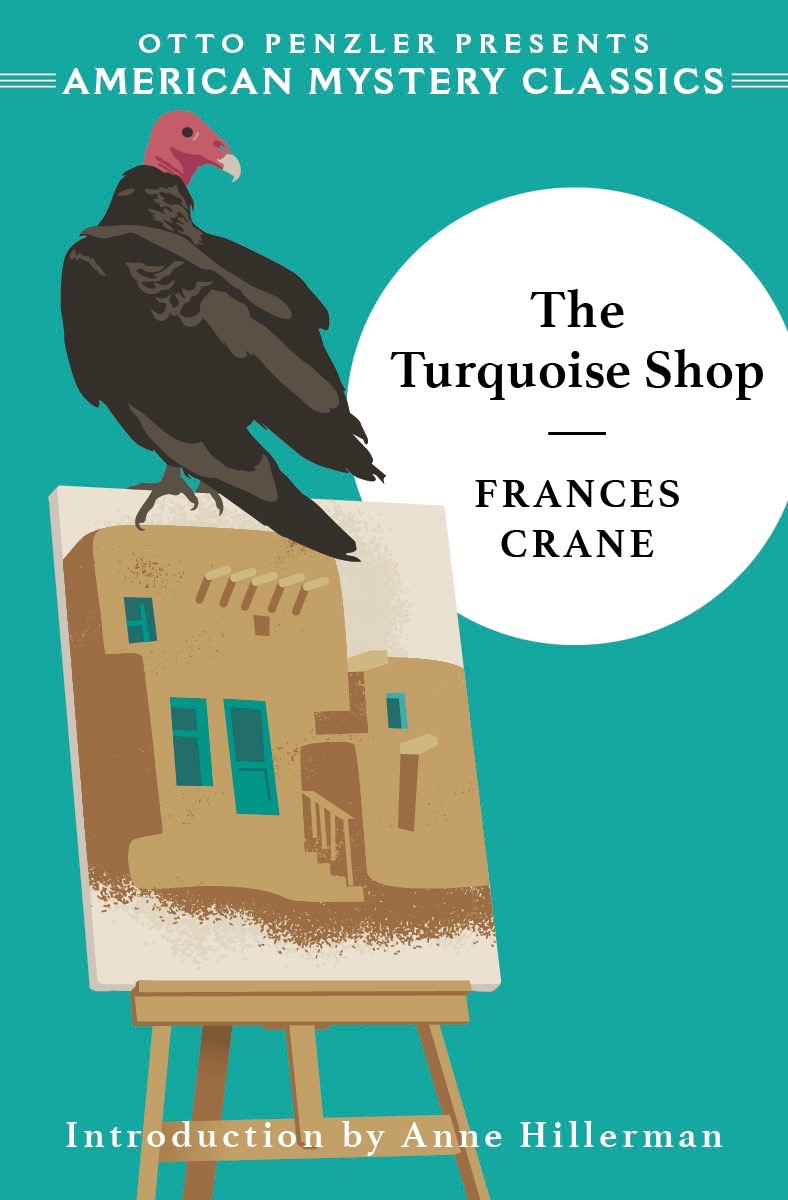
I’ve made significant progress in the #20booksofsummer24 challenge, which is hosted by Cathy @746books by reaching the 25% mark after completing the intriguing The Turquoise Shop by Frances Crane!
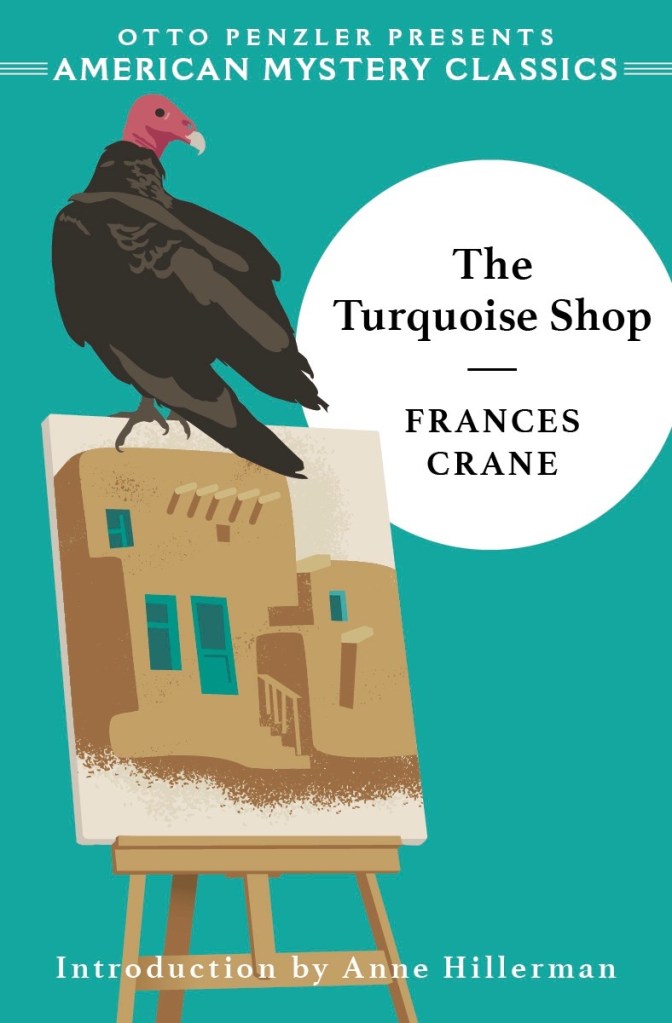
The Turquoise Shop, the first installment in Frances Crane’s captivating Pat and Jean Abbott series, introduces us to the vibrant Jean Holly. She manages a thriving jewelry shop and art gallery in the picturesque Santa Maria, New Mexico. Patrick Abbott, a newcomer to Santa Maria, stumbles upon her shop while seeking a painting mentor. However, the tranquility of the artist colony is shattered when Patrick’s true profession as a private detective is revealed. The question looms: Is he here to assist the local police in uncovering the identity of the body discovered in the desert? This mystery plot, woven with a vibrant setting and diverse characters, is sure to keep you on the edge of your seat.
You’ll have to keep reading and find out.
Plot Synopsis:
Jean Holly, a character you’ll quickly grow to love, has lived in Santa Maria, New Mexico, for eight years. She loves running her own business, the beautiful sunsets, and the easy-going, eclectic vibe of the town. Her company, The Turquoise Shop, sells a modest amount of jewelry, art, and gossip. It’s through her eyes that we experience the unfolding mystery and the rich tapestry of the American Southwest.
The local gossip flooding the town is that Mr. Brandon, husband of the wealthy Mona Brandon, has shacked up with the beautiful Madonna like Carmencita and had been living with her for about a year under the name Arkwright before having his throat cut in the desert and his body left.
Carmencita, Mona Brandon’s former housemaid, was sent to prison for stealing a diamond bracelet. She doesn’t elucidate the town gossip or confirm Arkwright’s true identity—instead, she maintains she didn’t know anything about him. She also contends that she never stole Mona Brandon’s bracelet; it was planted on her. Carmencita has moved on and is planning to get married soon. She wishes the people of Santa Maria would forget the body in the desert.
However, a private detective, Patrick Abbott, arrives suddenly in Santa Maria and befriends Jean Holly. He learns about the silver jewelry she sells in her shop and starts going to parties and dances with her. He integrates himself into the artist scene and even gets a painting mentor.
Not long after Abbott’s arrival, a lot of strange things start happening in Santa Maria: counterfeit money starts circulating, Carmencita is found shot in Mona Brandon’s pool, artists start fleeing, and it all centers around the man in the desert, whose death started a chain reaction of events that even the arrogant, rich, and powerful, Mona Brandon can’t keep under control.
The Review
The Turquoise Shop includes an insightful essay from Anne Hillerman about the real-life woman who inspired Mona Brandon and the town she blessed with her patronage, which is the template for the mythical Santa Maria.
Hillerman also highlights the beautifully nuanced way Frances Crane lovingly portrays the American Southwest and the many different cultures blending in the area. I agree that one of the highlights of The Turquoise Shop is Crane’s depictions of how Native Americans, Mexicans, and Anglos coexist, clash, deal with law enforcement, and understand the land. We, the reader, are plopped down in situ- in the unfolding mystery of identifying the man in the desert and his purpose in Santa Maria, but also in the middle of a chaos of people and cultures living in New Mexico for many generations. It’s a fascinating microcosm of 1940s New Mexico that doesn’t exist today but is preserved- in its intensity in The Turquoise Shop. You’ll feel like you’re right there, experiencing the heat, the dust, and the tension of the Southwest.
The Turquoise Shop drives home how Anglos have flocked to New Mexico to pursue their dreams and earn a living and how this has created tension with the Native people, who are at the bottom of the new class structure. While not the focus of the Turquoise Shop, race and especially class pervade the mystery, with the wealthy, dismissive, and cruel Mona Brandon clearly at the top of the social ladder.
Mona Brandon, having married well and then divorced even better, married her husband, Mr.Brandon, several years earlier and settled in Santa Maria. She built a large house, filled it with local girls as servants to her every whim, and then bought and brought struggling artists from around the world to Santa Maria. Her patronage pays the stipends of several artists, has filled the coffers of the local hospital, and keeps the town’s social scene lively. Mona Brandon’s money allows her to carry on a blatant affair and cover up crimes for her lackeys in exchange for complete loyalty.
However, Jean Holly has been able to keep herself from being sucked into Mona Brandon’s orbit with her independent shop, which runs without tutelage from Brandon, and Jean’s ability to stand her ground and keep secret means that she knows everything swimming below the surface of the town and has enough sense to stay out of the fray, maintaining peace with Santa Maria’s eccentric inhabitants.
Jean Holly, a strong, independent woman who wisely runs the gossip mill and a thriving business, is an exciting character who loses some of her multifaceted identity in later books. She loves her business; she loves Santa Maria. She has a deep knowledge about her place in the world- that it’s sad to realize that her personality shrinks so much by becoming Patrick Abbott’s wife, whose main job in later books is encouraging him to take jobs and snoop around. Her love of New Mexico and art is left behind when she leaves with Abbott for his hometown of San Fransico. After reading this beautiful exploration of New Mexico and its people- it breaks my heart that the whole series only stays in the American Southwest, where Jean Holly (the book’s protagonist) calls home.
Patrick Abbott, ostensibly in Santa Maria to become a better painter, soon became a fantastic foil for Jean. He’s intelligent, thoughtful, and a reasonable investigator whose somewhat duplicitous role as PI never feels mean-spirited. He never uses Jean or her knowledge to trick or make her feel small. They are thick as thieves from the beginning and enjoy each other’s company. Abbott is essentially kind and incredibly attuned to the feelings and attitudes of others, which means he is genuinely lovely but also highly adept at knowing when someone is lying. An easygoing man who likes to mingle means he’s accepted into the community immediately and walks into Mona Brandon’s lair, knowing she’s a viper. Abbott’s personable but astute nature endears him to the local police, and his cooperative nature means that together, he and the sheriff figure out who Arkwright is, what happened to Mr. Brandon if Carmencita killed herself or committed suicide, and how Mona Brandon is involved.
The mystery of what the unidentified man was doing in Santa Maria and who his accomplices and confederates are is well-telegraphed. Most of the enjoyment of the story comes from watching Abbott and Jean slowly trap them and the mounting violence they commit to try to escape justice. However, the mystery part of the book is too easy to piece together, and Crane’s ability to construct crimes improves as the series progresses.
The Turquoise Shop is an atmospheric and character-driven story that is beautifully told. The so-so mystery detracts from what could have been a brilliant first book by budding mystery author Frances Crane.

#20booksofsummer24 Reviews



 Golden Age of Detective Fiction
Leave a reply to The Norths Meet Murder by Frances and Richard Lockridge (1940) | #20booksofsummer24 | Book 17 of 20 – Golden Age of Detective Fiction Cancel reply