“Harlequin’s Lane” was first published in 1927 in the United Kingdom. This story appeared in the collection The Mysterious Mr. Quin, a compilation that introduced readers to the enigmatic Mr. Harley Quin and his friend, Mr. Satterthwaite. Unlike many of Christie’s works that focus on crime and deduction, the stories featuring Mr. Quin often venture into the realm of the supernatural and the uncanny, with “Harlequin’s Lane” being a notable example.
In the United States, “Harlequin’s Lane” was included in the collection The Harlequin Tea Set and Other Stories. This collection brought together several of Christie’s short stories, some of which were previously difficult to find in American publications. The inclusion of “Harlequin’s Lane” in this anthology helped introduce the story to a wider audience, showcasing Christie’s versatility beyond her more famous detectives, Hercule Poirot and Miss Marple.
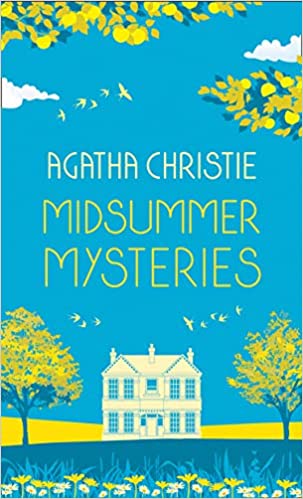
Over the years, “Harlequin’s Lane” has been reprinted in various anthologies and collections. Its presence in these compilations has ensured that new generations of readers can discover this unique tale. Most recently, Harlequin’s Lane was republished in Midsummer Mysteries in 2021.
Plot Synopsis
Mr. Satterthwaite has accepted an invitation to stay at the country house of a couple named Denham. Though they are not part of his usual social circle, he finds them intriguing. John Denham, forty years old, had rescued his wife, Anna, from the Russian Revolution. When Mr. Satterthwaite arrives, the Denhams are out, so he walks into the garden. He wanders to a lane called “Harlequin’s Lane” that borders the grounds and is not surprised to encounter Quin, who is also staying with the Denhams. Together, they walk down the lane, known locally as “Lover’s Lane,” to its end at a former quarry now used as a rubbish tip. On their way back to the house, they meet Molly Stanwell, a young local girl who is part of the night’s entertainment, a masquerade that includes an enactment of the Commedia dell’arte. Two professional dancers from London are scheduled to perform as Harlequin and Columbine.
At dinner, the conversation turns to the Soviet state and the tragic loss of the ballerina Kharsanova during the early days of the revolution. After dinner, Anna learns the dancers were injured in a car crash. Prince Sergius Oranoff, who was driving the car, arrives later. Anna, who knows Oranoff, seems quite happy in his presence, and Mr. Satterthwaite appreciates Oranoff’s knowledge of the arts. That evening, Satterthwaite sees Molly with John Denham in Lover’s Lane, and Anna, who also sees them, stays with Satterthwaite for support.
Anna dances in the role of Columbine, while Quin dances in the role of Harlequin. The performance is a success, and Satterthwaite recognizes Anna as the lost Kharsanova by her dancing. In the darkness of the garden, she confides in Satterthwaite that she gave up dancing because John wanted a wife, and she loved John. She says she will be with the one who loved her years ago. After her dance, Anna tells Satterthwaite, “I know, my friend, I know. But there is no third way. Always look for one thing–the lover, the perfect, the eternal lover… It is the music of Harlequin one hears. No lover ever satisfies one, for all lovers are mortal. And Harlequin is only a myth, an invisible presence… unless——” … “Unless–his name is–Death!”
Oranoff expects to meet Anna that night. Satterthwaite sees Anna and a figure dressed as a Harlequin in Lover’s Lane; the Harlequin is Mr. Quin, but somehow with a face like Denham’s from ten years earlier, when he was still adventurous. Anna’s maid saw her go by but noticed she was alone, significantly confusing Satterthwaite. Fearing for Anna, he and Oranoff rush down to the tip, where they find Anna’s dead body. Quin appears, and Satterthwaite asks why the maid could not see Mr. Quin. Quin replies that because Satterthwaite has never walked down Lovers’ Lane, he can see things others cannot. Quin asks Satterthwaite if he regrets never walking down Lovers’ Lane, and Satterthwaite, suddenly afraid, ultimately answers that he does not regret it. Quin then quietly departs.
The Review
One part Russian fairy tale, one part Italian comic opera performance, one part mystery, and one part supernatural thriller, Harlequin’s Lane attempts to blend several different story styles and even different storytelling methods in a dreamy, highly fantastical short story.
The Russian fairy tale elements, which borrow heavily from Russian ballet and romantic notions of the hidden princess, which became even more popular after the disappearance of Anastasia Romanoff’s body after her family was killed in the revolution, are well done and romantically told.
Russian folklore and fairytale elements, often used in ballet, should dovetail nicely with the Italian comedy performance style of declaration. Russian ballet and declaration use doubling or twinning in performances to better illustrate love connections and interconnected fates. Suppose the story stayed as a romantic fairytale. In that case, it would have been a successful short story and possibly an entire romance novel that could have been published under Agatha Christie’s Mary Westmacott pseudonym.
However, adding the supernatural Mr. Quinn and his appearing Mr. Saiterwaithe muddles the waters a bit. For some reason, Mr. Quinn, who governs the paths of lovers, doesn’t seem to any of the lovers in the story to guide them in following their hearts, caution them against adultery, or be a premonition against death; rather, he appears to Mr. Saiterwaithe as a confirmed bachelor who is staying in the house and observing all of the romantic triangles and interludes.
Mr. Satterwaithe and the whole country house setting are at odds with the dreamy, romantic themes of love and fate. Christie does try to integrate the rigidity of the country house and how it reflects Mr. Denham, and how the Chinese screen in Mrs. Denham reflects her and their love. However, the heavy-handed way Christie does this, and how it’s at odds with the rest of the house, lacks any subtlety.
The writing could be better with more description of actions- which Christie can do beautifully- eschewing dialogue and putting too much weight on Mr. Satterwaithe’s erroneous impressions. There’s so much that is told and not shown that it reads more like an outline of a story than an actual story.
Several compelling ideas should be explored and realized on the page. The mysteries are so easily penetrated and lack any factual suspenseful underpinnings, making Harlequin’s Lane an unsatisfying mystery.
Nothing definite is ever really pinned down about the protagonist, Harley Quinn; is he a figment that comes when lovers meet? If so, why does he appear to non-lovers? Is he even necessary for the story? a short story about a romantic Russian ballet dancer in a love triangle while hosting a weekend house party and performance is enough to sustain the story. The Harlequin, a commedia dellarte device, is an exciting way to tie all these ideas together, but the parts never make a whole.
Harlequin’s Lane is rather overstuffed with ideas and underserved in execution. Not one of my favorites.
Midsummer Mysteries Reviews
Story #1: The Blood-Stained Pavement
Story #2: The Double Clue
Story #3: A Death on the Nile

 Golden Age of Detective Fiction
Leave a comment