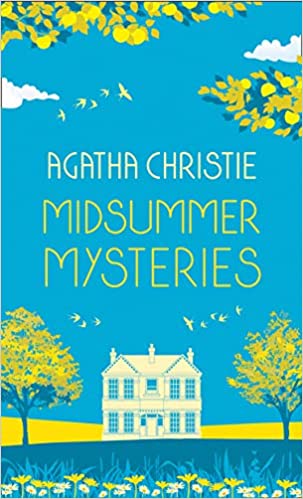
“The Rajah’s Emerald,” initially published in 1926, delights readers again in the 2021 short story collection Midsummer Mysteries, which features twelve short stories spanning Agatha Christie’s career.
Plot Synopsis
James Bond and his girlfriend Grace are on summer holiday at Klimpton-on-Sea. Bond feels instead put out because Grace would rather spend time social climbing with her wealthier friends than with James. She ditches him several times to have drinks or dinner with her friends and shamelessly flirts with a much richer potential suitor.
Klimpton-on-Sea, a luxurious resort town, is the perfect backdrop for this tale. It boasts a wealthy clientele, none wealthier than a visiting Rajah, who has brought a large emerald, famous for its beauty and size. With many titled patrons wishing to see the famous emerald, the coastal town is packed with titled heirs. Grace, who is not shy about her aspirations, makes it clear to James-who is struggling to afford this holiday- that she’ll leave him for a wealthier man, if the opportunity arises.
Having gone off with friends to their private changing station on the beach, Grace leaves James to wait in the long line for the public changing area. James can hear Grace cavorting and laughing, so he slips into one of the private huts, changes into his swimsuit, and joins the party on the beach.
He and Grace mingle with Grace’s friends and then decide to go to an expensive restaurant. While the others go to the private bathing hut to change, James surreptitiously slips back into the unlocked private hut he commandeered before. He changes into his clothes and hurries along to meet them.
As he is rushing down the street, he feels something in his pocket. To his surprise, it’s the Rajah’s emerald! James is now faced with a crucial decision. His thoughts are interrupted by a policeman, who seems to know about the emerald. However, James quickly realizes that the policeman is not what he seems and skillfully manipulates the situation to his advantage.
The Review
I’m probably in the minority, but I didn’t care for this story. I had little sympathy for James Bond’s jealous attacks and constant inferiority complex. If I were in Grace’s position, I, too, would be on the hunt for a new boyfriend. I would have been allowed to break up with James first, but it’s a minor defect.
Grace is painted as a heartless social climber, but I’ll be honest. Women in Grace’s social position had to secure a good position as the wife of a wealthy man to guard against poverty. While Grace went about it in a gauche manner, I don’t fault her for using her charms to hook a man.
The story picks up once James is away from Grace and has found the emerald. Is the policeman scrupulous? How should James return the emerald? If the emerald is returned, who will believe he didn’t steal it? James’ quick thinking neatly sewed up all of these fears, and he is rewarded by having lunch with the wealthy patron of the emerald.
In the end, Christie tries to make some sweeping pronouncements about how Grace would have been better served by sticking by James, but I disagree. Lunch with a wealthy man is nice, but he isn’t offered a high-paying job or the Rajah’s patronage if she gets in with a rich man who serves her much better than her boyfriend, having a nice meal.
Christie also attempts to further denigrate Grace by saying genuinely wealthy people don’t flaunt their wealth but rather dress shabbily and are humble. Not to fact-check, Christie, but the 1920s were infamous for their ostentatious displays of wealth and full of social climbing to better their standing. I don’t think Christie has the moral high ground she believes she has.
The mystery is clever and short but full of moralistic ponderings that border on ridiculous. I’m just lukewarm on “The Rajah’s Emerald”





 Golden Age of Detective Fiction
Leave a reply to KC Cancel reply