
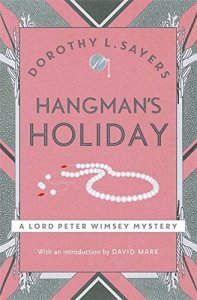
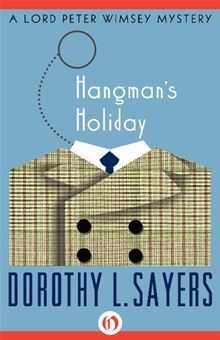
“The Queen’s Square” is the first of two Christmas-themed Lord Peter Wimsey short stories from the short story collection Hangman’s Holiday, which I’ll be reviewing for the holiday season. In “The Queen’s Square”, Lord Peter Wimsey is attending a festive costume party a few days before Christmas, when a young woman is found dead next to a radiator, he investigates his fellow guests.
Synopsis
“The Queen’s Square,” from Hangman’s Holiday, unfolds during a lively Christmas-season masquerade ball at the home of Sir Charles Deverill. The party’s ingenious theme requires every guest to attend dressed as a game—an idea that, as one amused attendee remarks,
“cuts out all those wearisome pierrots and columbines.”
This does not feel like a not-so-thinly veiled reference atoAgatha Christie’s short story: “The Affair at the Victory Ball”, where Pierrots and Columbine dressed in green and white provide the vital clue to Hercule Poirot and help him unmask a killer.
Oh, how wrong they were.

Lord Peter Wimsey dressed as the Jack of Diamonds, while his mother presides regally as the Queen of Spades, and together they mingle with their fellow guest. Between dancing and copious amounts of drinking, Lord Peter Wimsey observes the rather vivacious Miss Grayle flirt rather unashamedly with any man she can make eyes at.
From the married to the unattached, to her supposed paramour, any man will do. Jealousy baited in the not-so-fair sex, provides quite the running commentary amongst the guests as they gossip about the virtue, or lack thereof, of Miss Grayle and which man ultimately has her favor.
However, the frivolity ends abruptly when the body of Miss Grayle is found strangled by the radiator. Since Lord Wimsey is on the spot, he is tasked with reconstructing a timeline and getting alibis from his fellow partgoers.
Lord Peter Wimsey sets out to pick apart his friend’s unimpeachable alibis and reconstruct an accurate timeline of events; even so, it still narrows the field to two equally possible suspects. Bunter, who had been photographing the whole party, reveals the killer’s final trick while developing his film, unmasking the killer hiding in plain sight.
The Review
If you’ve read “The Affair of the Victory Ball,” don’t be afraid that her story is just a retread or a rehashing of the same story. Instead, I think of these two stories as in conversation with one another, with Christie’s story giving you the first part of a clue, but definitely not the solution. It’s a fun little Easter egg for readers of detective fiction without making the story storyincomprehensiblee to reo are unfamiliar with Christie’s story.
“The Queen’s Square” best story element is the ending- where the killer uses light and color to trick their fellow guests into believing they were somewhere else at the party. I also liked that Sayers made Bunter and his oft-talked-about photography hobby the instrument by which the killer is unmasked, not Lord Wimsey’s oft-praised interviewing skills, which were relatively subdued and outmatched by his guests’ lies and alibis.
The setting of the story also shines- with the costumes being full on- there’s a man who can’t sit down because he’s dressed as a Billiard table- and the costumes are described in suptous detail. The guests, coming as traditional board game pieces or cards, populate the party. Still, there are quite a few others who took the theme and ran with it- a water polo player and several others are a filigree of imagination. Honestly, this costume party sounds like a blast with carousing and people fully committing to the bit.
It’s not the most traditional Christmas party. Still, there’s singing of “good king Wescalious” and lots of good cheer, which I think resonates with many of us who are going to parties of various degrees of partying- works party, a white elephant party, or a friend’s secret Santa- and makes us think Sayers really knows how to plan a bash.
However, the frivolity and fabulous costumes do lead the reader a little bereft on character development, with each of the main suspects boiled down to one main characteristic- jealous boyfriend, potential romantic partner, married flirt, the contemptuous wife- with Miss Grayle getting the bulk of the character development, which is unfortunately that she’s a “loose woman.”
Clutch pearls!
I think Miss Grayle, who is a bit of a flirt, is definitely judged by the rather strict social mores of her time, which dates the story a bit, and some relatively light flirting seems like a rather weak motive for what ultimately happens to her. I think the story could have been bolstered with more examples of Miss Grayle’s honeyed words inflaming her potential killers. But this book is set in the 1930s, so back then, being a bit of a flirt was an excellent motive for killing.
Lord Peter Wimsey’s investigation was perfectly perfunctory, and I liked his reticence in questioning his peers. While there was a lot of evidence suggesting who it couldn’t be it couldn’t be a nice twist- there wasn’t much evidence pointing towards the solution until the final twist.
The Verdict
Overall, the story seemed a little too much like a logic problem, with the characters and their motive sketched in the barest of terms. It lacked a little meat on the bone, which is rare for a Sayers story. I liked her ideas and the solution; I just wanted a bit more heft to the story and better character interactions. Fun and festive, “The Queen’s Square” is a delightful little puzzle to add to your Christmas reading this season.
#Christmas2025ReadingChallenge | #20BooksOfChristmas

My 2025 20 Books of Christmas Reviews
- “A Christmas Tragedy” by Agatha Christie (1930) | REVIEW
- I Am Half-Sick of Shadows by Alan Bradley (2011) | REVIEW
- “The Adventure of the Blue Carbuncle” by Arthur Conan Doyle (1887) | REVIEW
My 2024 20 Books of Christmas Reviews
- The Night of Fear by Moray Dalton(1931) | REVIEW
- Mystery in White by J. Jefferson Farjeon (1937) | REVIEW
- Murder After Christmas by Rupert Latimer (1944) | REVIEW
- Murder for Christmas by Francis Duncan (1949) | REVIEW
- Groaning Spinney a. k. a. Murder in the Snow by Gladys Mitchell (1950) | REVIEW
- The Adventure of the Christmas Pudding by Agatha Christie (1960) | REVIEW
- The Twelve Deaths of Christmas by Marian Babson (1979) | REVIEW
- Murder on a Mystery Tour by Marian Babson (1985) REVIEW
- Mistletoe Murder by Leslie Meier (1993) | REVIEW
- Death at Wentwater Court by Carola Dunn (1994) | REVIEW
- A Highland Christmas by M. C. Beaton (1999) | REVIEW
- The Christmas Murder Game by Alexandra Benedict (2021) | REVIEW
- The Christmas Appeal by Janice Hallett (2023) | REVIEW
- Hercule Poirot’s Silent Night by Sophie Hannah (2023) REVIEW
- Everyone This Christmas Has A Secret by Benjamin Stevenson (2024) | REVIEW

 Golden Age of Detective Fiction
Leave a reply to The Affair at the Victory Ball by Agatha Christie (1923) – Golden Age of Detective Fiction Cancel reply